Charlie Health
- 4.0
- Rating
- 10.00K
- Installs
- Free
- Price

 Analysis by App-foxy
I approached Charlie Health as a medical app rather than a general wellness download, and that distinction matters. Its purpose is to help people pursue intensive treatment from home, so the right question is not simply whether the interface feels pleasant. I wanted to know whether the app gives a person enough clarity and control to take part in care without making an already sensitive situation feel confusing.
My overall impression is cautiously positive. The app is free to install, aimed at everyone from an age-rating perspective, and developed by Charlie Health. It has reached over ten thousand installs and holds a 4.0 average from around sixty ratings, with roughly twenty-seven written reviews. Those figures suggest a modest but visible user base, although they are not a substitute for checking whether the service itself fits your clinical needs.
What the app is really for
The most important thing to understand is that this is not presented as a mood diary, meditation library, symptom checker, or replacement for urgent medical care. Charlie Health is built around intensive treatment programs delivered from home. That makes it more relevant to someone looking for structured mental-health support than to a person who only wants occasional self-guided exercises.
You May Also Like

 AccuWeather: Weather Radar
AccuWeather Review: A Quick, Clear Forecast for Everyday Decisions
For everyday plans, the best forecast is the one you can understand quickly. AccuWeather makes rain timing, radar, and local conditions easy to act on, with a few trade-offs.

 Hill Climb Racing
Why Hill Climb Racing Still Turns Crashes Into One More Run
A tiny car, a bumpy hill and one more upgrade: Hill Climb Racing keeps resurfacing because its simple chaos makes every near-miss feel personal.

 AliExpress - Shopping App
AliExpress Makes Global Shopping Feel Personal, but Shoppers Bear the Risk
AliExpress turns a global marketplace into a pocket-sized discovery engine. Its reach is useful, its shopping loop compelling, and its trade-offs easy to miss.

 Lords Mobile: Kingdom Wars
Lords Mobile Is a Kingdom-Building Routine, Not a Quick Match
A case-by-case verdict on the building, battles, device demands, and social commitments that make Lords Mobile rewarding for some players and exhausting for others.

 PDF Scanner app - TapScanner
TapScanner Makes Paperwork Easier to Capture, Check, and Share
TapScanner makes scanning with a phone feel less like a rescue operation and more like a dependable step in getting work done. Its capture tools are useful, though not flawless.

 Block Blast!
 Shows How Much a Puzzle Game Can Leave Out
A quiet grid game shows why puzzle players increasingly value instant clarity, repeatable skill and low-pressure play—and where the genre still needs to catch up.
More From Our News Desk
View All News


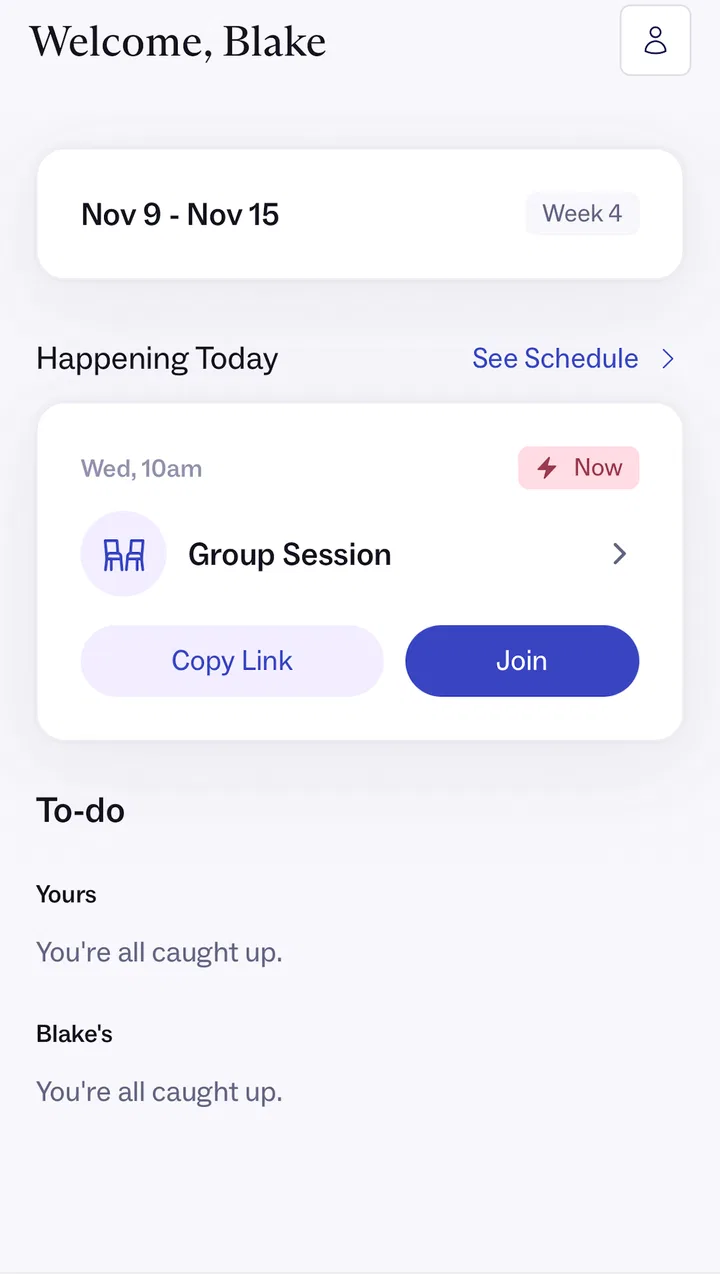
In practical terms, I would think of the app as one part of a treatment relationship rather than the entire treatment experience. A person may open it when preparing to take part in care, checking what they need to do next, or staying connected to a program that would otherwise require more travel. The value comes from reducing friction around remote treatment, not from turning the phone into a therapist.
That focus also helps set expectations. If you are searching for a quick breathing tool after a stressful commute, there are simpler wellness apps that may suit you better. If you need an immediate response to a crisis, an app connected with an intensive program is not the first place I would turn. Emergency services, a crisis line, or a qualified professional should take priority when safety is at risk.
A realistic everyday use case
Imagine someone who has started an intensive program but has difficulty arranging transport, taking time away from work, or getting to a clinic regularly. A home-based option can remove one major barrier: the journey itself. The app becomes useful when the person keeps a quiet space available, prepares before a scheduled session, and treats the phone as a doorway into care rather than as a casual social app.
That scenario reveals a trade-off. Remote access can make treatment more reachable, but it also places more responsibility on the user. A weak internet connection, a noisy room, a shared household, or a forgotten notification can interfere with participation. I would recommend planning a private location and a backup way to contact the care team before relying on any digital treatment workflow.
Why trust matters more here than in ordinary apps
Medical apps handle a different kind of attention. With a shopping or entertainment app, an unclear button is irritating. In a treatment setting, uncertainty about where to go, what to share, or how to manage an account can increase stress. I therefore judge Charlie Health less by visual novelty and more by whether the experience encourages deliberate choices.
The developer is clearly identified as Charlie Health, and the app is categorized as Medical. Those details do not prove that the service is right for every person, but they provide useful context: this is meant to sit closer to organized care than to informal peer support. I would still read the onboarding screens carefully instead of tapping through them, especially if the app requests information connected with treatment.
One practical trust habit is to pause whenever a screen asks for personal details. Enter only what is needed for the next step, check who the information is being shared with, and avoid using a public device or an unsecured shared account. These are sensible precautions for any health service, but they matter more when the information may describe symptoms, treatment history, or personal circumstances.
Controls, permissions, and visible choices
My review of trust has to stay grounded in what is actually visible to the user. I would not assume that a medical label automatically means strong privacy protections, and I would not assume the opposite either. The useful approach is to inspect the permission prompts, account screens, sign-in flow, and any privacy explanations shown during setup.
Before committing to regular use, I would check whether the app explains why each requested permission is needed. A treatment app may reasonably need certain access for communication or scheduling, but a user should still understand the purpose before approving anything. If a permission seems unrelated to the task on screen, I would deny it first and see whether the core experience continues.
The same principle applies to notifications. Notifications can be helpful when they remind someone about treatment-related activity, yet they can also reveal sensitive information on a locked screen. I would review the phone’s notification preview settings and choose wording that does not expose private details to other people nearby. This is an easy control to overlook, especially in a shared home.
Account management deserves equal attention. I would look for clear ways to sign out, update contact details, change credentials, and remove access from an old phone. If a device is shared with family members, signing out after use is more important than relying on the phone’s general lock screen. I would also avoid saving passwords in a browser or password manager that other household members can open.
These steps are not proof of a particular data policy; they are ways to keep the user involved in decisions. The strongest experience for a health app is one where consent is understandable, permissions are purposeful, and account controls are easy to find when a person is tired or anxious.
How I would prepare before the first session
I would install the app on a personal device, update the operating system if needed, and test the sign-in process while I still had time to solve problems. The current version is 2.12.0, and the app supports Android 7.0 or later. That broad compatibility is useful for people with older phones, but older hardware can still create practical issues such as weak microphones, limited storage, or unstable video performance.
I would then choose a private place, check the camera and microphone, and make sure the charging cable was nearby. I would avoid doing the setup in a crowded public space, not because the app is necessarily unsafe there, but because a treatment conversation can become private very quickly. Preparation also reduces the temptation to rush through consent screens immediately before care begins.
A second useful habit is to keep a short written list of questions outside the app. For example: Who should I contact if I cannot join? What happens if I miss an appointment? Which parts of the program require the app? Writing these down prevents a technical problem from becoming a clinical misunderstanding.
Where sensitive moments are most likely
The most sensitive moments are not limited to typing a diagnosis or describing a difficult experience. They include the first account setup, notification previews, shared-device use, forgotten passwords, and any point where a person decides whether to continue with treatment. A user may also feel pressure to disclose more than necessary simply because a form looks official.
I recommend reading each field as a question rather than as an instruction. If a form asks for information you do not understand, pause and seek clarification through the appropriate Charlie Health support or care channel. Do not guess, and do not place highly personal details into a general message box unless you know who will receive it and why.
Another overlooked issue is the environment around the phone. Headphones can improve privacy, but they can also make it harder to notice someone entering the room or a device alert. A private room, a stable connection, and a clear plan for interruptions are often more valuable than any small convenience in the interface.
When changing phones, I would treat the old device as a data-sensitive object. Sign out, remove stored credentials, and use the phone’s reset process before passing it to someone else. If the app offers account or session controls, use them rather than assuming that deleting the icon removes every active session.
How much control does the user retain?
The app’s biggest potential strength is that it can make participation in intensive care more practical from home. That is meaningful agency for people whose schedules, mobility, location, or responsibilities make frequent travel difficult. Choosing a home-based format can let someone arrange the setting around their needs instead of abandoning care because the logistics are too heavy.
At the same time, home treatment is not the same as total flexibility. A structured program may still involve commitments, communication, and preparation. I would not download Charlie Health expecting an on-demand service where every part can be completed whenever convenient. Its usefulness depends on being willing and able to participate in an organized treatment process.
There is also a difference between choosing remote care and being isolated with a phone. If you need physical examination, immediate in-person supervision, medication management that requires direct evaluation, or support during an acute emergency, another care route may be more appropriate. The app can support access to treatment, but it should not be treated as a universal answer for every mental-health situation.
For families and caregivers, the right approach is to respect the user’s privacy while agreeing on practical support. Helping someone find a quiet room or remember a session is different from reading their messages without permission. I would discuss boundaries in advance rather than improvising when a notification appears.
How it compares with familiar alternatives
Compared with a meditation app, Charlie Health is more treatment-oriented and less suitable for casual, self-directed use. A meditation app may offer short exercises without requiring a person to enter a program. That convenience is useful for everyday stress, but it does not provide the same kind of intensive-care context suggested by Charlie Health.
Compared with a traditional clinic, the home-based model may reduce travel and make participation easier for people with demanding routines. The trade-off is that the user must provide the private space, device, connection, and attention that a clinic normally helps supply. Someone who feels safer with face-to-face contact may prefer an in-person provider.
Compared with a general telehealth platform, this app appears more closely tied to Charlie Health’s own treatment offering rather than functioning as a broad directory for every medical need. That specialization can make the experience more coherent for the right user, but it may feel limiting if you want to compare many independent professionals or services in one place.
Compared with a crisis resource, it serves a completely different purpose. A crisis service is designed around immediate help and urgent safety. Charlie Health should be considered for organized treatment, not as a substitute for emergency assistance. Keeping that distinction clear is one of the most important decisions a prospective user can make.
Who should consider it, and who should skip it
I would consider this app if I were looking for intensive mental-health treatment that could be accessed from home, understood the need for a structured program, and had a private place and reliable device available. It may be especially appealing when transport, work, school, caregiving, or mobility makes regular in-person attendance difficult.
I would skip it, at least for now, if I only wanted a simple relaxation tool, disliked scheduled or organized care, lacked a private environment, or needed immediate crisis intervention. I would also compare other options if I wanted a broad marketplace of clinicians rather than a focused treatment pathway.
The free price removes one barrier to trying the app, but it should not be confused with a promise that every part of treatment has no cost. Before beginning a program, I would ask directly about eligibility, coverage, appointments, and any financial responsibility. That conversation is more useful than assuming the download price describes the entire care arrangement.
My cautious verdict
Charlie Health makes the most sense when the problem is not a lack of wellness content but difficulty reaching intensive treatment. Its home-centered approach can be genuinely practical, and the medical focus gives it a clearer purpose than many general mental-health downloads. I also appreciate that the app’s value can be judged through concrete user choices: permissions, notifications, account access, privacy during sessions, and preparation for technical interruptions.
My reservation is that digital access can create a false sense of simplicity. Installing an app is easy; participating safely and consistently in treatment requires more planning. Users should protect notification privacy, check account controls, ask questions about care and costs, and keep an emergency option separate from the app.
The app is free, rated for Everyone, and supports Android 7.0 and later, which makes it approachable from a device-compatibility standpoint. Still, compatibility does not decide clinical suitability. I would recommend Charlie Health to someone actively considering its intensive home-based programs, not to someone looking for a generic self-care download.
In the end, I see it as a potentially useful access point rather than a complete answer. If its treatment model matches what you need, the ability to engage from home may remove a serious obstacle. If you need immediate safety support, broad provider choice, or casual self-guided exercises, a different option will likely serve you better. Use it with clear expectations, deliberate privacy choices, and a backup plan for urgent care.
FAQs for Charlie Health
01What is Charlie Health, and who is it designed for?
Charlie Health is a virtual mental health service designed primarily for teens, young adults, and families who need more support than traditional weekly therapy may provide. It commonly offers structured intensive outpatient and virtual programming, including therapy groups, individual sessions, and family involvement. Availability, eligibility, and treatment recommendations can vary by location and clinical assessment.
02How does the Charlie Health program work?
After an initial assessment, Charlie Health may create a personalized care plan based on a person’s symptoms, goals, age, and support needs. Treatment can include individual therapy, group therapy, family therapy, and care coordination through secure online appointments. Sessions are generally attended remotely, so users need a compatible device, reliable internet connection, and a private place to participate.
03Is Charlie Health appropriate for mental health emergencies?
Charlie Health should not be treated as a replacement for emergency services or immediate crisis intervention. If someone is in immediate danger, has a medical emergency, or may harm themselves or another person, contact local emergency services or go to the nearest emergency department. In the United States, users can also call or text 988 for the Suicide and Crisis Lifeline.
04Does Charlie Health accept insurance, and what costs should users expect?
Charlie Health works with certain insurance plans, but coverage depends on the user’s insurer, state, plan benefits, authorization requirements, and recommended level of care. Out-of-pocket costs may still apply, including deductibles, copayments, or coinsurance. Before enrolling, users should confirm eligibility and request a clear explanation of expected costs directly from Charlie Health and their insurance provider.
05What should I know about privacy and using Charlie Health online?
Charlie Health uses a digital care model, meaning therapy and communication take place through online platforms rather than entirely in person. Users should review the service’s privacy policy, consent information, and communication practices before beginning treatment. It is also important to join sessions from a private environment, protect account credentials, and understand that online care may have technical or location-related limitations.
Pros
- Personalized virtual mental health programs for teens and young adults.
- Offers group sessions that can reduce feelings of isolation.
- Includes individual therapy and psychiatric support in one program.
- Care plans can address anxiety
- depression
- trauma
- and other conditions.
- Remote access makes support available without frequent clinic visits.
Cons
- Availability and services may vary depending on location and eligibility.
- Insurance coverage
- copays
- and out-of-pocket costs can differ significantly.
- Virtual care may not suit users who prefer traditional in-person therapy.
- Group sessions require sharing space with others and may feel uncomfortable.
- It is not designed for immediate crisis or emergency mental health support.

Charlie Health
Gallery